
 03 february 2026, 10:32
Email marketing is an important tool for businesses in healthcare. Every year, dental practices lose about 10 to 40% of their patients due to patients moving, switching providers, or simply forgetting to schedule their next appointment.
With email marketing, you can maintain regular communication with your current patients and attract new ones. By employing the right tools and following best practices, email can drive impressive growth for your practice.
This guide shows you exactly how to use email marketing to build the kind of loyal patient relationships that sustain a dental business for years to come.
Why is email marketing important for dental clinics?
Email is a proven tool for building long-lasting customer relationships. Your patients are busy people, and email is an effective way to keep them informed.
Here are some of the goals you can achieve with healthcare email marketing:
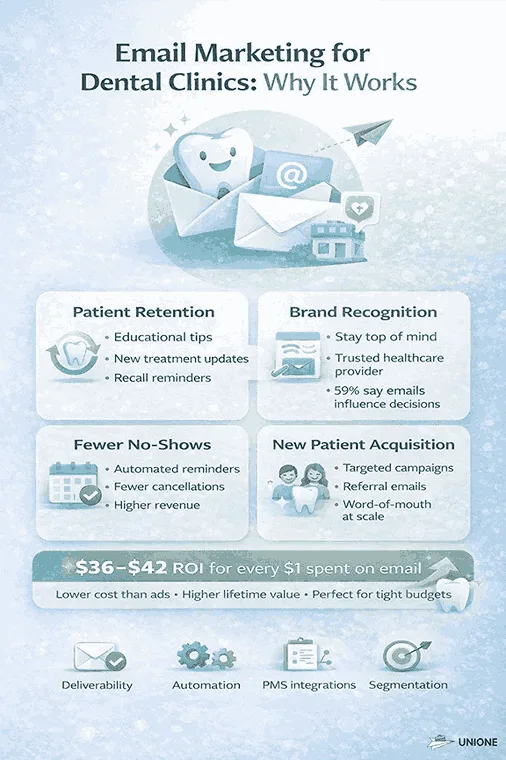
Enhance patient retention: Regular updates about your brand, educational messages, and updates about new treatments keep patients informed and engaged. With a tailored email, you let your patients know you care about their dental health and encourage them to schedule an appointment.
Improve brand recognition: Patients have a lot of options when it comes to choosing a dental clinic. Frequent communication through email keeps your brand top of mind. In fact, Forbes cites that about 59% of people say emails affect their purchasing decisions.
Your audience may not reach out when they receive your messages. But when they have a need for a dentist, your brand will easily come to mind. With consistent, valuable emails, you become their trusted healthcare provider.
Reduce no-shows and cancellations: Missed appointments are a big loss of revenue for dental practices. Setting up automated appointment reminder emails a day or two before scheduled visits can reduce cancellations. This boosts your revenue without requiring additional staff or phone calls.
Attract new patients: More than 53% of small business owners in the UK, US, Canada, and Australia use email marketing to acquire new customers. Email isn’t just for existing customers. You can send targeted messages to promote the benefits of your services.
Happy patients are often willing to recommend your practice to friends and family. However, they need a gentle, timely prompt to do that.
Automated referral request emails sent after successful treatments can turn satisfied patients into advocates. That way, you create a steady stream of new patient leads without expensive advertising costs.
What ROI Can Dentists Expect from Email Marketing?
The ROI from email marketing shows that it consistently outperforms nearly every other marketing channel available. Compared to paid ads or social promotions, email requires lower ongoing costs while delivering higher long-term returns through repeat visits and patient retention.
For every dollar spent on email marketing, you get an average of $36 to $42 in return. This is especially helpful for dental practices on a tight marketing budget.
Here are key factors that maximize ROI in dental email marketing:
- Email deliverability: Your ROI depends on whether emails land in spam or arrive in inboxes. Working with a reputable email service provider and following best practices for email deliverability ensures your messages reach their intended recipients.
- Automation: Automated workflows for appointment reminders, recall notifications, and follow-up sequences deliver consistent results without ongoing manual effort.
- Integration with practice management software: When email platforms integrate with scheduling and patient management systems, clinics can trigger timely, relevant messages. You can send messages based on real patient activity, such as missed appointments, upcoming cleanings, or completed treatments.
- List quality and segmentation: Practices that segment their email lists by patient type, treatment history, and engagement level see significantly higher returns than those sending generic blasts to everyone.
Building and Segmenting Your Email Marketing List
The success of a dental email marketing campaign starts with your email list. The easiest way to build a compliant list is to include a sign-up form on your website. It could be a pop-up or an embedded form that encourages visitors to share their email addresses. But while this method can grow your dental email marketing list, there are other ways to increase your subscribers:
Patient paperwork: Include an email opt-in checkbox on digital intake forms, consent forms, and registration documents. Make it clear what patients are signing up for, such as receiving appointment reminders, oral care tips, or practice updates.
Social media: If your clinic has a strong social media following, use those platforms to promote your email newsletter. Share sign-up links in bios, posts, and stories, and highlight the value subscribers receive, such as free dental care tips and discounts.
Industry events and webinars: Dental conferences, community health events, and educational webinars are opportunities to collect email sign-ups from participants. Always obtain explicit consent and clearly state how their contact information will be used before adding them to your list.
How to Segment Your Dental Email Marketing List
Now that you know how to build a dental email marketing list, we’ll cover how to segment your audience.
Sending a generic email to your entire contact list is like prescribing the same treatment to every patient who walks through your door. Each person is there for a different purpose, and ensuring your message resonates with them lowers unsubscribe rates. To segment effectively, divide your audience into smaller, targeted groups based on shared characteristics and behavior, such as:
- Patient status: New patients, active patients, and lapsed patients require different messaging and follow-up schedules.
- Treatment history: Segment patients based on past procedures to send relevant care tips or related service reminders.
- Appointment behavior: Group recipients by attendance patterns, including frequent no-shows, regular visitors, or overdue patients.
- Engagement level: Separate highly engaged subscribers from those who rarely open emails to adjust frequency and re-engagement strategies.
- Location or clinic branch: For multi-location dental practices, segmentation ensures patients receive accurate office details and scheduling information.
Best Campaigns for Dental Email Marketing
Wondering what types of email campaigns work best for dentists? Here are some effective emails that should be a part of your marketing playbook.
Welcome Emails
Welcome emails have a higher open rate than other email types, so it’s your chance to make the best initial impression. Send a warm message immediately after a new patient joins your practice or subscribes to your list.
Thank them for their trust and clearly set expectations about what content they’ll receive and how frequently. This is also the perfect opportunity to let them select their preferred content types and communication frequency. Doing this helps reduce future unsubscribe rates.
Educational Content
One great dental email marketing campaign type that builds trust is educational emails. Use these to boost patient loyalty by sharing valuable information. For example, a dental clinic might send emails on topics such as What to Know About Dental Implants or Common Causes of Tooth Sensitivity. Educational emails can also explain preventive care best practices or clarify what patients should expect before and after treatments.

Source: ReallyGoodEmails
Transactional Emails
Transactional emails are triggered by specific patient actions. Transactional email examples include appointment confirmations, receipts, results notifications, and post-treatment follow-ups. Since patients actively expect this information, they engage more reliably than with promotional content.
Reminder Emails
This type of dental email marketing message serves you in two ways. First, you can remind patients of their appointments one or two days before to reduce no-shows. Reminder emails should be easily scannable and straight to the point. Each reminder should include clear appointment details, services they booked, date and time, and your clinic address.
Another way to use reminders is to prompt annual checkups, teeth cleaning appointments, and follow-ups. Send notifications to patients emphasizing the importance of preventive care or other acute services that are easily neglected. These proactive reminders keep patients on schedule and prevent small issues from becoming costly problems, while keeping you fully booked.
Promotional Campaigns
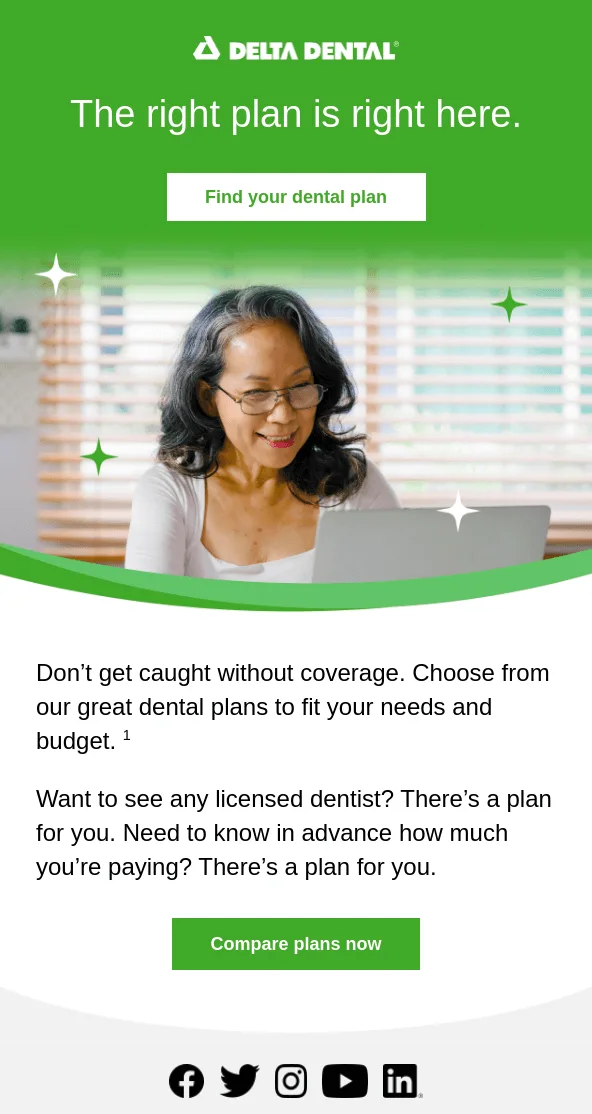
Attracting new patients and encouraging existing ones, promotional campaigns are a key part of email marketing for dentists. Common examples include seasonal checkup reminders, teeth whitening offers, new service announcements, or limited-time discounts for preventive care visits.
Best practice when sending promotional emails is to target relevant segments. For instance, you could send different campaigns to patients overdue for cleanings and those who have previously expressed interest in cosmetic treatments. Using clear calls to action, like “schedule an appointment” or “request more information,” clearly tells recipients their next step.
Source: ReallyGoodEmails
What Compliance Rules Apply to Dental Email Marketing?
Compliance is non-negotiable in email marketing for dentists, as patient data is involved. When running email campaigns, regulations govern how you collect, use, and store subscribers’ details. The most relevant are CAN-SPAM, GDPR, and HIPAA.
CAN-SPAM applies to all commercial or promotional emails sent to U.S. subscribers. Under the CAN-SPAM requirements, you must:
- Include accurate sender information;
- Add a visible unsubscribe option;
- Honor opt-out requests promptly;
- Provide a valid business address in the email;
- Use subject lines that reflect email content.
The General Data Protection Regulation (GDPR) applies if your subscribers are located in the European Union. Here’s what you need to adhere to GDPR in dentist email marketing:
- Obtain explicit consent before sending marketing emails;
- Clearly explain how you will use subscriber data;
- Collect only necessary personal data;
- Allow recipients to access, update, or delete their data.
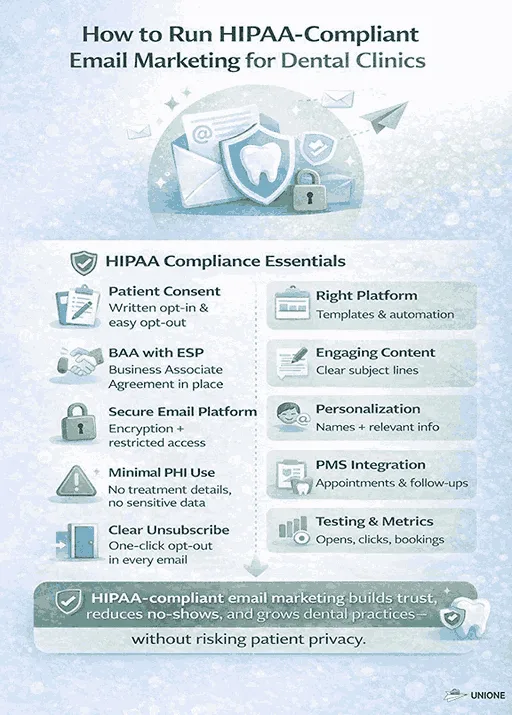
Health Insurance Portability and Accountability Act (HIPAA) focuses on protecting patient privacy. Dental marketing emails should avoid including protected health information (PHI). HIPAA requires the use of secure email systems and limiting access to patient data to reduce exposure risks.
How to Maintain HIPAA Compliance in Dental Email Marketing
Email provides the most direct line of communication between patients and a dental clinic. Yet every dental email marketing campaign must be HIPAA-compliant to protect patient privacy.
Most successful dental email campaigns focus on general health information, reminders, and educational content rather than clinical specifics. However, healthcare professionals must be careful to avoid disclosing protected health information (PHI).
Here are essential steps you should take to align with HIPAA guidelines:
Obtain patient consent: The first step is to obtain written consent to use patient information in emails. The consent form should clearly state how you will use patient data and provide an option to opt out of marketing emails.
Business associate agreement (BAA): Dentists need to sign a BAA with their email service provider. BAAs state the responsibilities of the business associates in complying with HIPAA guidelines and protecting patient information.
Secure email platforms: Employ reputable email solutions known for their robust security measures and compliance. Use platforms with strong encryption methods and ensure only authorized persons have access to patient information.
Minimize the use of PHI: When sending dental email marketing campaigns, only include essential patient information. Do not share sensitive data, such as a patient’s treatment details or social security number.
Clear opt-out button: Every marketing email you send must include a clear opt-out link. Dental clinics must honor every unsubscribe request and ensure the patient’s contacts are removed from the email list.
Staff training: Make sure everyone is on board and understands what information must not be included in email content. Conduct periodic reviews of automation software, email templates, and access permissions to avoid accidental violations.
Strategies for Effective Dental Email Marketing Campaigns
Email marketing for dentist practices works best if you do it the right way. Below are proven tactics and best practices for an effective campaign.
- Choose the Right Email Marketing Platform
Even if your lists are on the smaller side, you need a dedicated tool for email marketing campaigns. Manually sending emails is time-consuming and limits how much you can do. Here are features to look out for when choosing a platform:
- Visual editor and customizable templates;
- Segmentation and personalization capabilities;
- Automation tools;
- Built-in email testing;
- Reporting and analytics features.
There are many beginner-friendly platforms out there. If you need a budget option with all the robust features mentioned above, check out UniOne. You can send up to 6,000 emails per month free for the first four months without feature restrictions.
- Write Engaging Content
Start by crafting a subject line that grabs the attention of the reader. It should be short, generally under 50 characters, and reflect the purpose of the email. A good subject line can increase your email opens by up to 50%.
Next is your email content. Use a conversational tone that sounds like it’s coming from a trusted healthcare provider.
For design, use your brand colors to ensure consistency across customer touchpoints. Paragraphs should be short for easy scanning and convey the most important information.
Remember to keep your spam complaint rate low by avoiding common design mistakes like excessive use of uppercase, different fonts, or large image files that slow loading.
- Create Personalized Content
Personalization in email marketing increases engagement by making recipients feel like a cherished person, not just an entry in your database. For example, you can use the name of the recipient in subject lines and greetings.
The content you create also needs to be relevant, which is why segmenting your audience is an important part of dentist email marketing. You can send tailored content based on general patient information and interest without exposing sensitive medical data.
- Integrate with Existing Management Software
Email marketing becomes even more powerful when integrated with your existing management software. An email platform with built-in integrations or API access makes it easier to connect email workflows to patient management software. With the right setup, you can automate appointment confirmations, reminders, recall notices, and post-visit follow-ups while maintaining HIPAA compliance.
- Test and Measure Performance
Email marketing for dentists requires continuous monitoring to see what works and what doesn’t. Focus on performance indicators such as open rates, click-through rates, appointment bookings generated, and unsubscribe rates. Tracking these metrics helps you understand how patients engage with your content so you can refine your messaging.
A/B testing is also a powerful way to improve email performance. By experimenting with subject lines, send times, messaging, or design elements, you can determine which variations drive the best results.
- Automate Campaigns
Sending manual welcome emails or appointment reminders is impractical for busy dental clinics. Automation saves time and ensures patients receive timely, relevant messages. Some key workflows you can automate include:
- Welcome and onboarding emails;
- Appointment confirmations and reminders;
- Post-visit follow-ups and satisfaction surveys;
- Referral and loyalty campaigns.
Conclusion
Email marketing for dentistry can grow your practice with the right strategy. It keeps your audience engaged, boosts retention rates, and connects you with prospective patients. By sending appointment reminders, educational content, and personalized emails, your patients feel informed and valued.
Achieving consistent results often requires a reliable partner. UniOne helps dental practices succeed with secure, professional email marketing features.
You can seamlessly implement practices such as segmentation, personalization, and email automation to ensure your messages are relevant and timely. From appointment reminders and transaction receipts to follow-ups, well-planned dental email campaigns reduce no-shows and build long-term trust.
Related Services
UniOne offers a range of features that simplify email marketing for dentists. The platform covers:
- Email solutions for healthcare: Ensure HIPAA-compliant communication with secure email delivery.
- Transactional emails: Send booking confirmations, payment receipts, or test results.
- Email automation: Automate appointment reminders, post-visit follow-ups, and referral campaigns to save time.
- Email integration: Seamlessly connect your email platform with practice management systems, CRMs, and scheduling tools.
- Email marketing analytics: Track campaign performance with detailed metrics, including open rates, clicks, and conversions to optimize future campaigns.
FAQs
Who should receive emails from a dental clinic?
Emails should be sent only to people who have opted in to receive communications. This includes current patients, recent visitors, and individuals who have explicitly signed up through your website, social media, or in-office forms.
How much should dentists budget for email marketing?
Email marketing is highly cost-effective. Dental clinics typically spend between $50 and $500 per month, depending on list size and platform features. Budgeting should account for the email service provider and any integration with practice management software.
How often should dentists send marketing emails?
Frequency depends on email type and audience. Most dental practices succeed with monthly newsletters, appointment reminders, and occasional promotional campaigns. Avoid over-emailing, which can lead to unsubscribes or reduced engagement.
What is the best email marketing platform for dentists?
The best email marketing platform for dentists offers HIPAA-compliant security, automation, integration capabilities, and personalization features. Look for solutions that simplify segmentation, triggered workflows, and analytics reporting. Leverage your free trial before finally committing.